Introduction
If you produce plastic, rubber or polymer composite products using kaolin as mineral filler, you may have encountered common production headaches: kaolin powder clumps inside polymer resin, uneven dispersion, reduced finished‑product tensile strength, brittleness, or unstable thermal performance batch‑to‑batch.
These issues mostly stem from poor compatibility between raw kaolin particles and polymer matrix. Surface modification changes kaolin surface characteristics and delivers far better filler performance in polymer systems. In this article, we explain the real‑world manufacturing problems, how modification works in simple terms, and which grinding & modification equipment fits your kaolin production line.
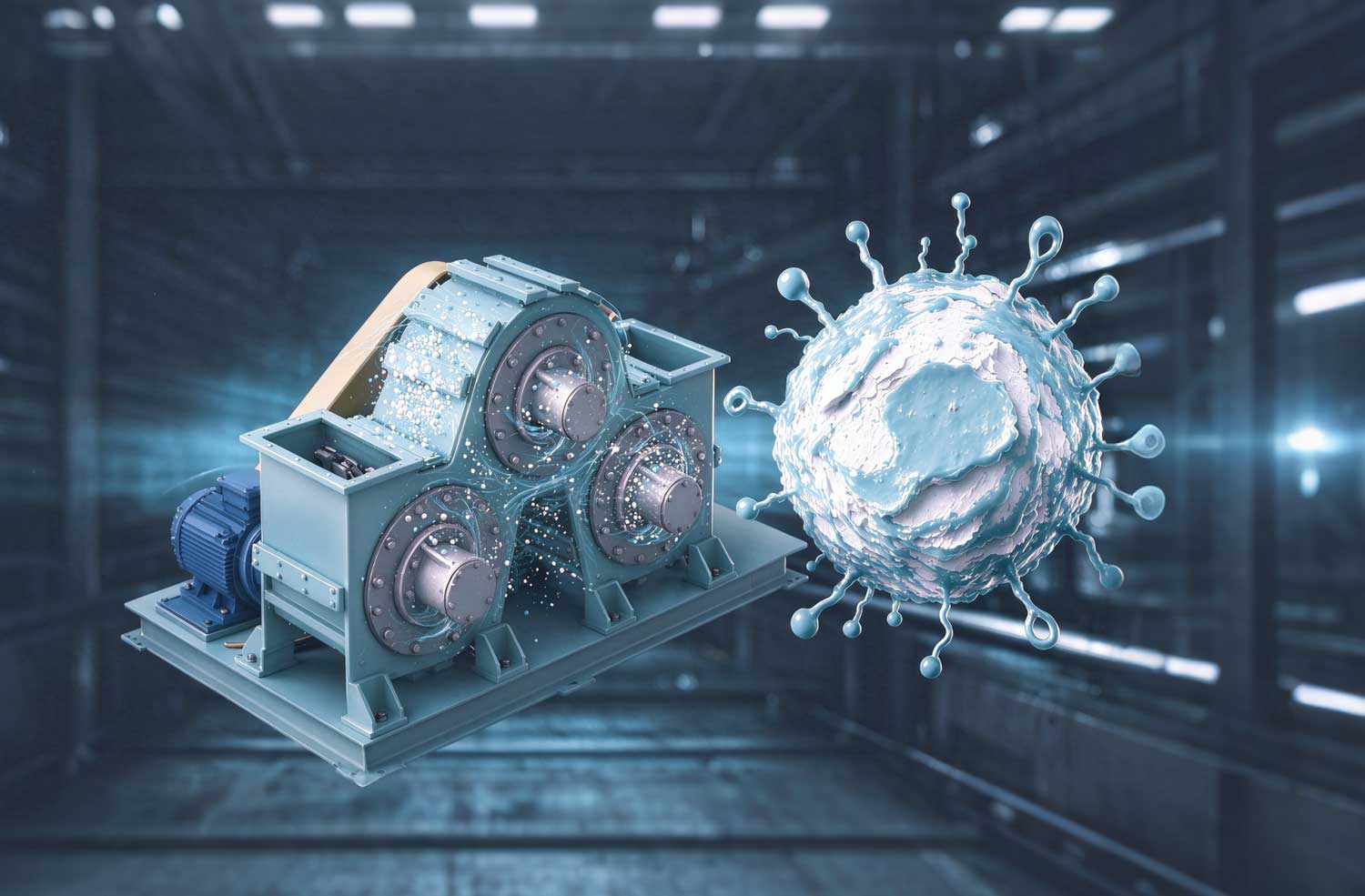
1. Why Unmodified Kaolin Shows Poor Compatibility With Polymers
Raw kaolin particle surfaces carry large amounts of hydrophilic hydroxyl groups, which means kaolin likes water, but most industrial polymer resins are hydrophobic (oil‑loving). When you directly add untreated kaolin powder into rubber, plastic or masterbatch:
- Kaolin particles tend to stick together and form hard agglomerates instead of separating into single fine particles.
- There is only weak bonding force between kaolin filler and surrounding polymer resin. Stress cannot transfer well across the interface.
- Final composite parts suffer lower mechanical strength, worse heat resistance, surface speckles, and inconsistent quality between batches.
Even if you produce ultra‑fine kaolin powder with narrow particle‑size distribution by grinding and classification, fine raw kaolin still cannot fully solve interfacial bonding problems without proper surface treatment. Good kaolin filler performance needs two conditions: qualified fine base powder, plus effective surface modification.
2. How Surface Modification Fixes Kaolin‑Polymer Incompatibility
Surface modification coats kaolin particle surfaces with coupling agents such as stearic acid, titanate or aluminate coupling agents, silane agents in continuous dry processing.
Instead of deep chemical lab‑level reactions, industrial dry modification physically and chemically attaches organic modifier molecules onto every kaolin particle surface. It turns hydrophilic kaolin surface into organophilic (polymer‑friendly) surface, bringing two core improvements:
- Stronger interfacial bonding: Modified organic layers create good affinity between kaolin and polymer resin. Load and stress can transfer between mineral filler and polymer matrix, improving tensile strength, impact resistance and thermal stability of finished polymer products.
- Greatly reduced agglomeration: Modified powder no longer sticks together easily. Kaolin distributes uniformly when mixing with molten polymer, lowering surface defects like speckles and grain marks in rubber and plastic goods.
Important note: Modification quality heavily depends on your incoming kaolin base powder. Your upstream grinding and classification equipment must deliver narrow particle‑size distribution and break hard agglomerates before modification step. Agglomerated feed powder will result in incomplete coating even if you run high‑end modification machines.
3. Real Production Benefits of Surface‑Modified Kaolin for Polymer Fillers
For mineral powder factories and polymer manufacturers, qualified surface‑modified kaolin brings measurable production‑side advantages:
- Higher filling loading rate: You can add more kaolin filler into polymer formula without obvious loss of mechanical performance, helping you cut raw‑material cost.
- Stable batch consistency: Uniform modifier coating reduces fluctuation on activation index across different production runs.
- Better processing fluidity: Modified kaolin powder flows freely, improving feeding and extrusion performance during polymer compounding.
- Broader application scope: Modified kaolin fits rubber filler, plastic masterbatch, engineering plastic composite and related polymer‑based finished goods.
4. Matching Grinding & Modification Equipment for Kaolin Polymer‑Grade Fillers
Good surface modification cannot work alone. Your full‑line workflow generally follows: raw material pre‑treatment → ultra‑fine grinding & classification → surface modification.
4.1 Front‑end pretreatment equipment
Turbo Flash Disintegration & Drying Machine
When your feedstock is high‑moisture washed kaolin filter cake or damp agglomerated ore, the Turbo Flash Disintegration & Drying Machine completes lump breaking and instant low‑temperature drying. It outputs loose low‑moisture powder for downstream grinding, removing wet agglomerates that will hurt later grinding and modification quality. It cannot do ultra‑fine grinding itself and works only as pre‑processing unit.
4.2 Choose proper grinding & classification system to make qualified base kaolin powder
The quality of base kaolin powder decides upper limits for your final modification effect. You can select different grinding lines based on target particle‑size D97:
- Ball Mill And Air Classifier Production Line
Closed‑loop ceramic ball mill plus Air Classifier. Best for mass‑producing D97 5‑10 μm polymer‑grade kaolin filler. Gentle tumbling grinding keeps natural kaolin lamellar shape. This line is cost‑effective for large‑volume regular polymer filler output. Note: capacity drops significantly for stable mass‑production below D97 3 μm. - Air Classifier Mill
The Air Classifier Mill integrates impact grinding and built‑in classification. Fineness adjustable for D97 3‑45 μm, powerful de‑agglomeration for calcined kaolin rework material. Optional ceramic lining avoids metal contamination. Suitable for medium‑high value polymer‑grade kaolin, but not economical for low‑cost bulk coarse kaolin below 800 mesh. - Fluidized Bed Opposed Jet Mill
The Fluidized Bed Opposed Jet Mill delivers medium‑small‑batch high‑purity sub‑micron kaolin (D97 2‑6 μm). No grinding‑medium contact ensures ultra‑low metal impurity. It fits high‑end polymer composite filler requiring ultra‑high purity, though equipment investment and gas consumption make it less ideal for mass‑production of ordinary D97 ≥5 μm industrial fillers.
4.3 Dry surface modification core equipment: Three‑Roller Vortex Surface Modification Mill
Our Three‑Roller Vortex Surface Modification Mill is continuous dry coating equipment custom‑built for kaolin polymer‑grade filler. It can directly connect after above grinding systems without intermediate buffer silos, realizing inline grinding‑to‑modification closed‑loop workflow.
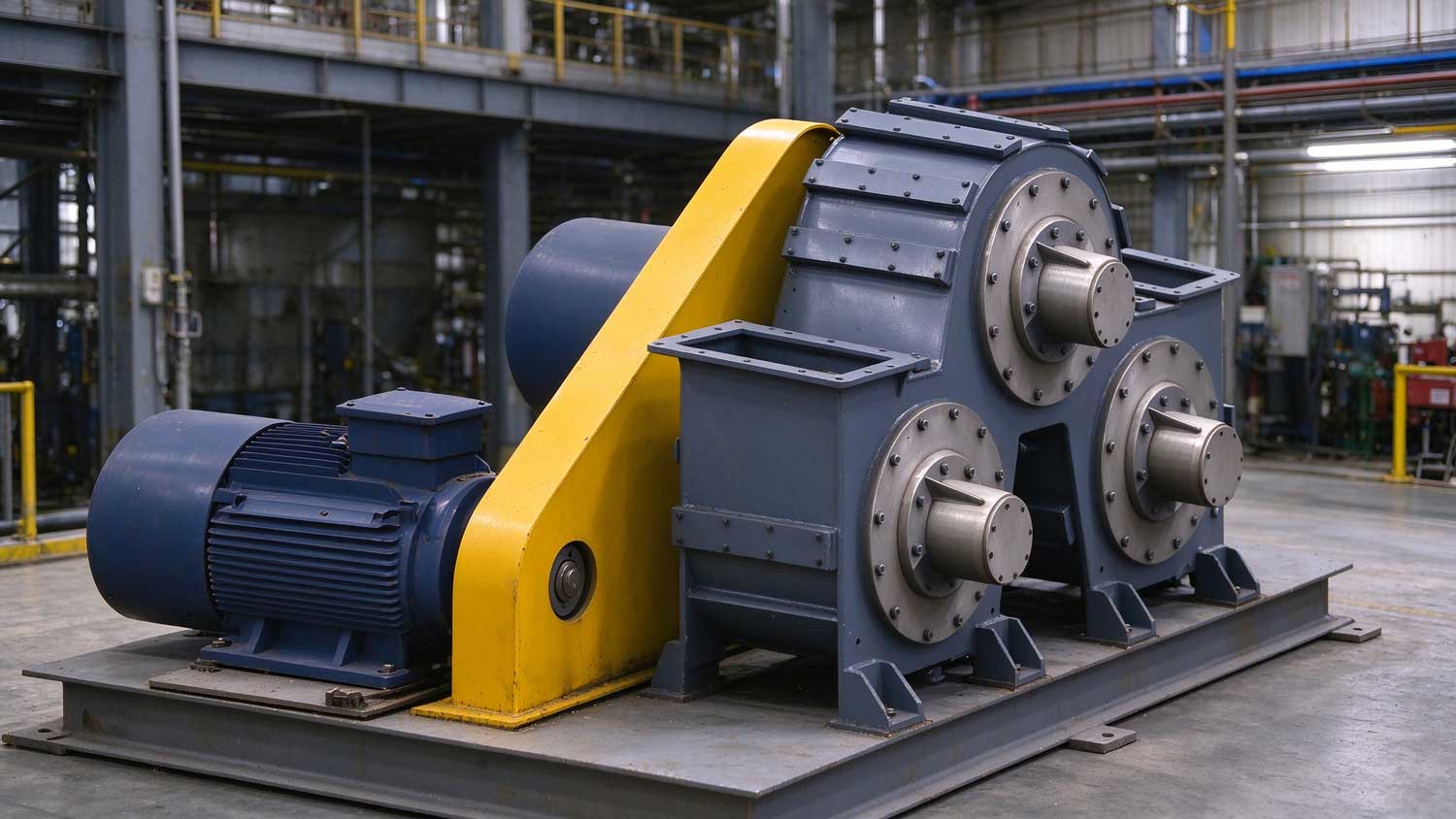
How this modification mill works in production
Flaky dry kaolin base powder is fed quantitatively through a sealed screw feeder. Solid modifiers such as stearic acid, aluminate or titanate coupling agents are synchronously dosed by metering pump.
Three serial triangular staggered high‑speed rotors generate cross‑directional turbulent vortex fields. Kaolin agglomerates get repeatedly sheared and collided across multi‑stage chambers for thorough de‑agglomeration. Friction between kaolin particles and rotating rotors generates stable self‑friction heat to melt solid coating agents. Modifier molecules fully react with hydroxyl groups on kaolin particle surfaces to achieve uniform coating effect.
The whole machine runs under full negative‑pressure sealing to prevent powder dust leakage. Finished modified loose kaolin powder is transported to cyclone separator and bag‑house dust collector for collection.
Key practical features for polymer‑filler kaolin production:
- Three‑stage staggered‑rotor vortex chambers break powder agglomerates and realize full contact between kaolin particles and melting modifier such as stearic acid, titanate or aluminate coupling agents. Reduces static dead zones which cause uneven coating in single‑cavity modification machines.
- Self‑friction heating: No extra external heating furnace needed; friction heat from powder‑rotor collision melts solid modifiers, simplifying plant layout and cutting auxiliary investment.
- Built‑in de‑agglomeration function: Breaks new agglomerates generated after ultra‑fine grinding, modified powder keeps good flowability ready for silo storage or packaging.
- Wide production capacity range:Models cover lab small‑batch 20 kg/h up to mass‑production 6 000 kg/h output, supporting pilot test and large‑scale factory production.
- Full negative‑pressure sealed operation minimizes powder leakage and raw‑material waste, improving workshop working environment.
4. FAQ
- Q: Can I skip grinding and directly send coarse kaolin into the Three‑Roller Vortex Surface Modification Mill?
A: No. Coarse or heavily agglomerated kaolin cannot achieve uniform surface coating. Agglomerate interiors will stay unmodified. Your finished polymer filler will still suffer dispersion defects. Always complete grinding and classification first to get well‑dispersed fine kaolin feedstock. - Q: Does surface modification replace ultra‑fine grinding?
A: Absolutely not. Surface modification improves interfacial compatibility between kaolin and polymer. Grinding & classification control particle‑size distribution and break agglomerates. Both steps are indispensable for qualified polymer‑grade kaolin filler. - Q: Which modifier should I select for my kaolin‑polymer formula?
A: Stearic acid works well for many general‑purpose rubber & plastic fillers. Titanate or aluminate coupling agents fit different resin systems. For high‑end polymer composite, silane coupling agents are widely adopted. Modifier selection should match your polymer matrix type. - Q: Can the Three‑Roller Vortex Surface Modification Mill work with all 3 grinding lines?
A: Yes. It supports inline connection after Ball Mill And Air Classifier Production Line, Air Classifier Mill and Fluidized Bed Opposed Jet Mill. If your feed is filter cake, add Turbo Flash Disintegration & Drying Machine as front pretreatment. - Q: What capacity options are available for this modification mill?
A: We supply standard models ranging from 20 kg/h lab‑scale unit up to 6 t/h large‑mass‑production machine. You can choose model according to your target hourly output. Pilot‑scale machine is available for formula testing before full‑line investment. - Q: What is the typical activation index of dry modified kaolin?
A: The activation index of dry surface‑modified kaolin can generally reach over 90% with proper formula and stable operation. The actual value depends on kaolin fineness, modifier dosage and feeding uniformity. We can run material tests to get accurate data for your raw ore. - Q: Is dry surface modification suitable for calcined kaolin?
A: Yes, dry surface modification works well for calcined kaolin. Since calcined kaolin has lower surface hydroxyl content, the modifier dosage and process parameters need to be adjusted separately. It is widely used for coatings and rubber reinforcement applications.
6. Get the Right Workflow for Your Kaolin‑Polymer Filler Project
Every kaolin project varies: raw ore condition, target fineness, output capacity, modifier type and end‑use polymer products all affect your final equipment configuration.
Read our full kaolin processing workflow page for complete reference: Kaolin Ultrafine Grinding, Classification & Surface Modification Equipment
If you plan to build or upgrade polymer‑grade kaolin filler production line, contact our engineering team to get customized process proposal for your raw material and target finished‑product requirements.